

Healthy Boundaries
What are boundaries?
Signs you need stronger boundaries
The importance of boundaries
You may:
Easily say yes to things you don’t have time to do
Offer to help when you don’t have the capacity
Feel resentful toward people for asking for help, and then upset with yourself for feeling that way
Keep from expressing an opinion or concern about something that matters to you
Avoid communicating your needs or expectations with others
Break promises to yourself
Feel a desire to run away from your responsibilities
Feel unable to ask others for help, or find it difficult to allow others to help you
Rescue others
Feel burnt out, exhausted or overwhelmed
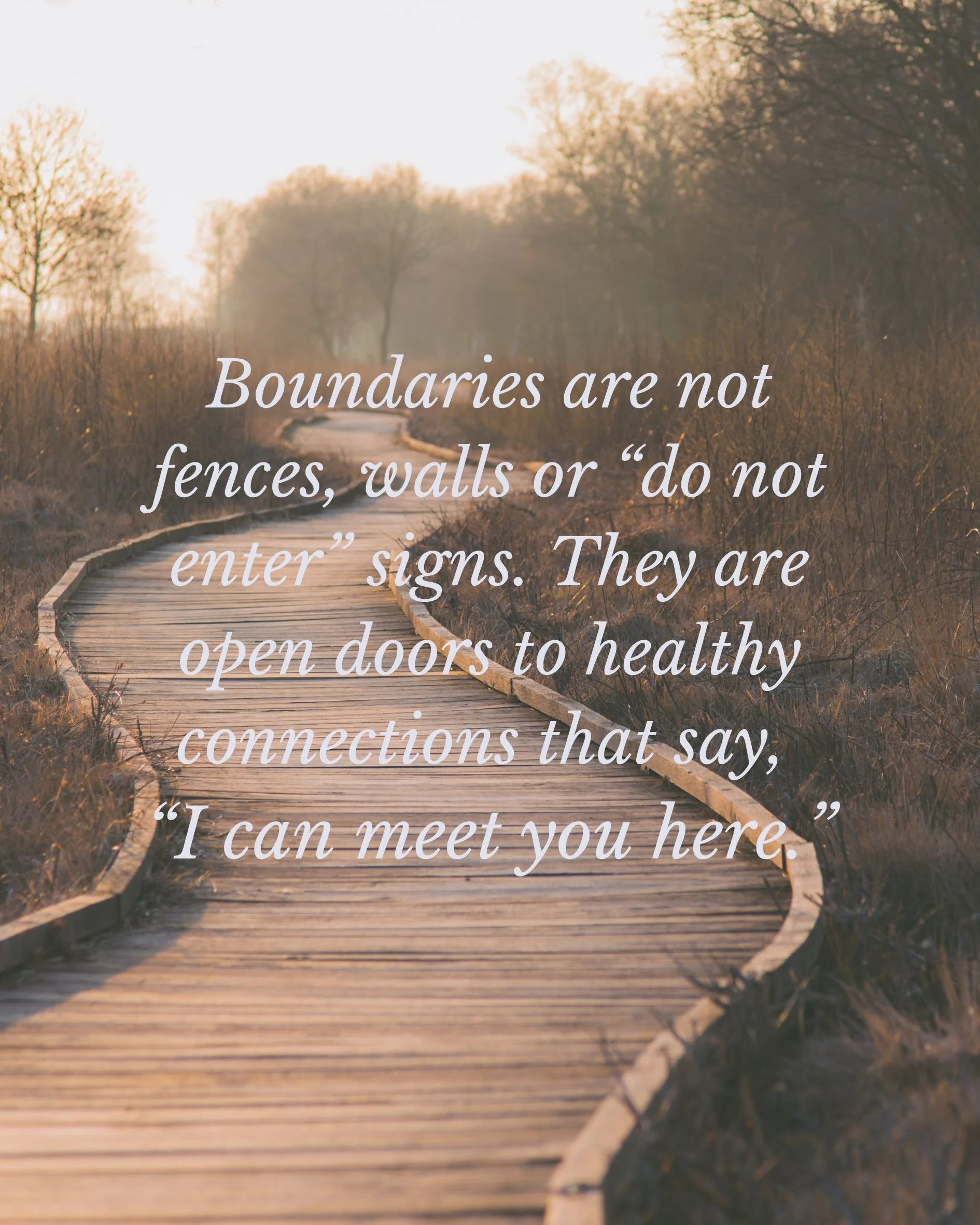
Before we begin to explore and work on setting healthy boundaries, we first need to understand what boundaries are, and are not. Boundaries are not fences, walls, places to hide, signs saying “don’t go there”, or dangerous. Boundaries are a way to communicate to others, I can meet you here. Boundaries begin with understanding one’s own self, and then communicating, clearly and kindly, the kind of engagement you are desiring in various relationships and environments. It fosters acceptance, mutual understanding, and healthy engagement. Healthy boundaries set the foundation for deeply fulfilling and trustworthy relationships with others and ourselves.
You’re not alone. Healthy boundaries are important expressions that allow us to show up authentically in our relationships, and keep us from overextending ourselves, or leaving ourselves behind. Unfortunately, knowing you need boundaries can be easier than setting them. Often the thought of “confrontation” or feelings of guilt can stop you, or you may find the desire is strong but you’re missing the language to use. Fortunately, boundaries can be learned, and the more you learn and practice them, the more you are able to enact them. Setting and maintaining healthy boundaries can lead to increased confidence and stronger relationships, as well as better sleep, and lowered anxiety and depression.
People who feel they may have poor boundaries are often called to be the caregivers and peacekeepers in their family, friendship and professional circles. While being a helper and showing up for others can be a noble and uplifting role to perform, we often leave ourselves behind, leading to burnout, resentment and exhaustion. It can be easy to think, “I should just say no”, or wish you could tell someone how you’re feeling, but feelings of guilt or dread may keep you from doing so.
Learn to identify, set, and maintain your boundaries
In therapy for boundaries, your practitioner will help you learn to identify your boundaries, and find the language to set and maintain them. You’ll explore your own needs, how they are or are not being met, areas you feel overextended or resentful about, and places where you may carry guilt at the thought of letting someone down or not performing an expected or even cherished role. You’ll also be guided to identify the areas where you do have healthy boundaries, and find your own boundary heroes. With uncovering, processing, learning and practicing, you’ll learn more about yourself, build boundary skills, and experience a healthier relationship with yourself and others.
Ready to reclaim your peace with healthy boundaries?
In person and online throughout CaliforniaOUR SERVICES
Mindfulness
Office Location:
970 Reserve Drive, Suite 170 Roseville, CA 95678
Info@MagnoliaTherapyServices.org
By appointment only